Gebruik het menu aan de linkerkant om ons volledige assortiment te bekijken. Van grootformaat printapparatuur tot de fijnste afwerkingsmaterialen.
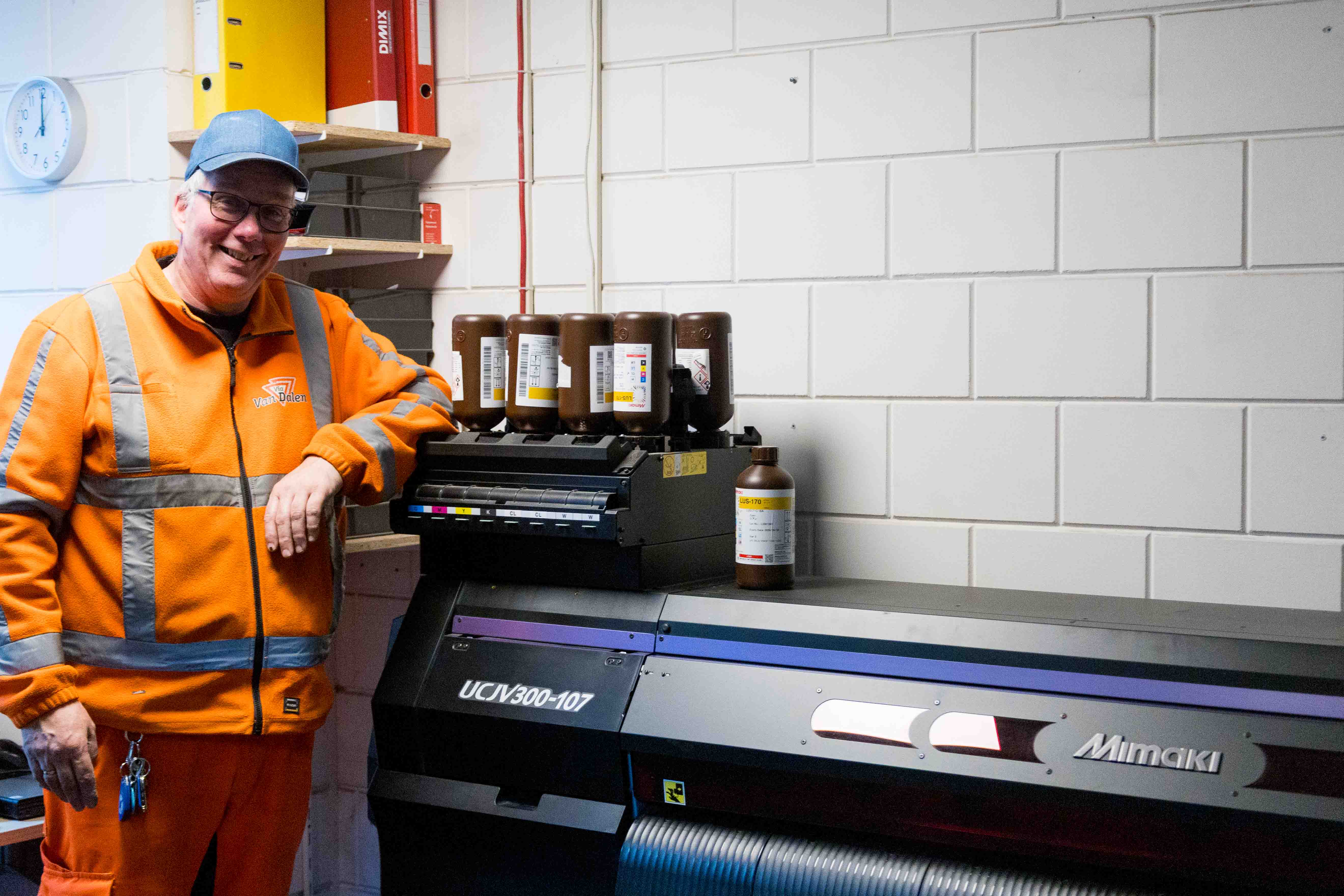
For companies that work daily on temporary traffic measures and outdoor space design, one thing perhaps counts the most: speed. That certainly applies to Via Van Dalen Groep, a sustainable supplier in traffic technology that provides a total package for municipalities and contractors throughout the Netherlands: from inspection and advice to production and installation of traffic signs. Since investing in a Mimaki UCJV300-107 from Dimix, the company has taken a big step forward in efficiency, flexibility and service. We spoke with operator and warehouse employee Jan van Kooten and project manager Robert Jansen about their experiences.
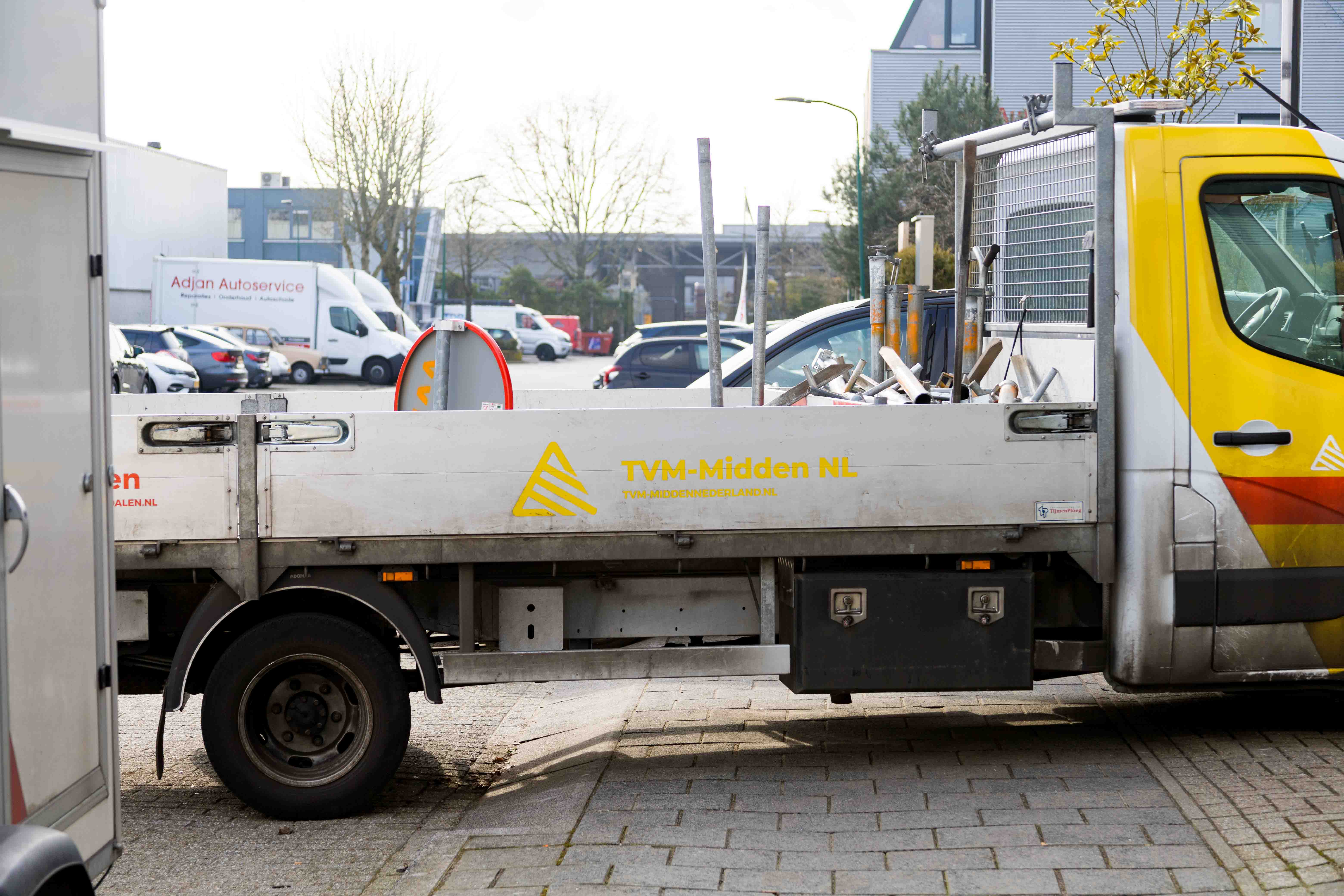
Via Van Dalen is much more than just a sustainable provider of traffic technology. The company is a holding company with multiple disciplines within public space.
"We basically do everything in outdoor space for municipalities," Robert explains. "We map the area, give traffic engineering advice and then also take care of the implementation; from permanent signage to temporary traffic measures." That broad approach makes all the difference in the market. "Clients often choose us because we can move quickly," says Robert. "They can place a total package with us and we take care of the rest." says Robert.
The reason for purchasing the Mimaki was mainly due to practical limitations of the existing machinery.
"When I started here, we only worked with a small 61 cm plotter," Jan explains. "But if you have to make a one-meter board, it's just not possible. Then you have to work in sections and that takes an enormous amount of time." During a demo at Mimaki in Diemen together with Dimix, it quickly became clear that the Mimaki offered a solution. "It was actually quickly decided," says Jan. "We were first looking for a larger plotter, but then we saw that we could also print and that gave a lot more possibilities."
"The biggest advantage is just speed and efficiency. You can get a lot more work done in a day."
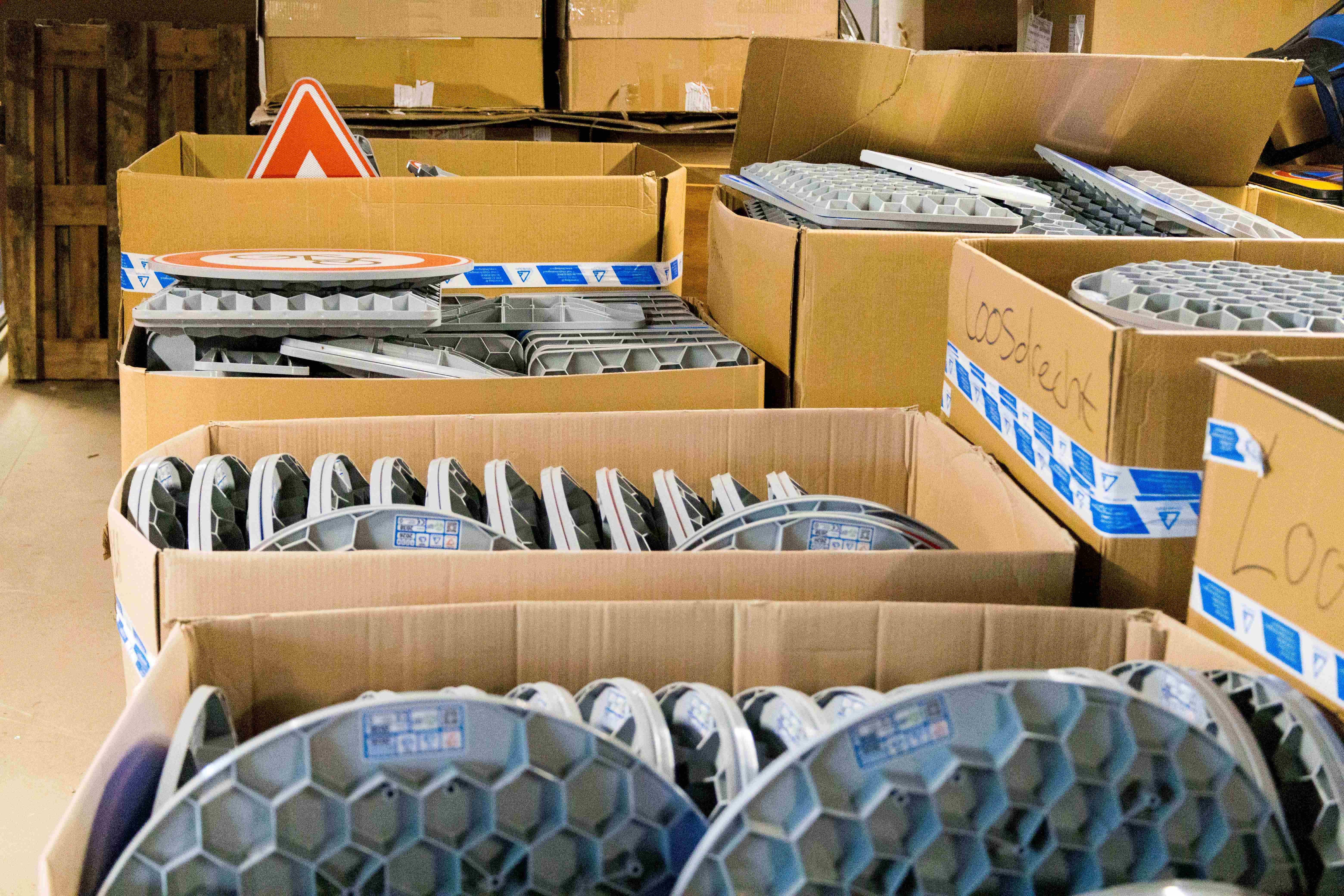
The impact on production was immediate. Especially for temporary traffic signs, the printer delivers a huge efficiency gain.
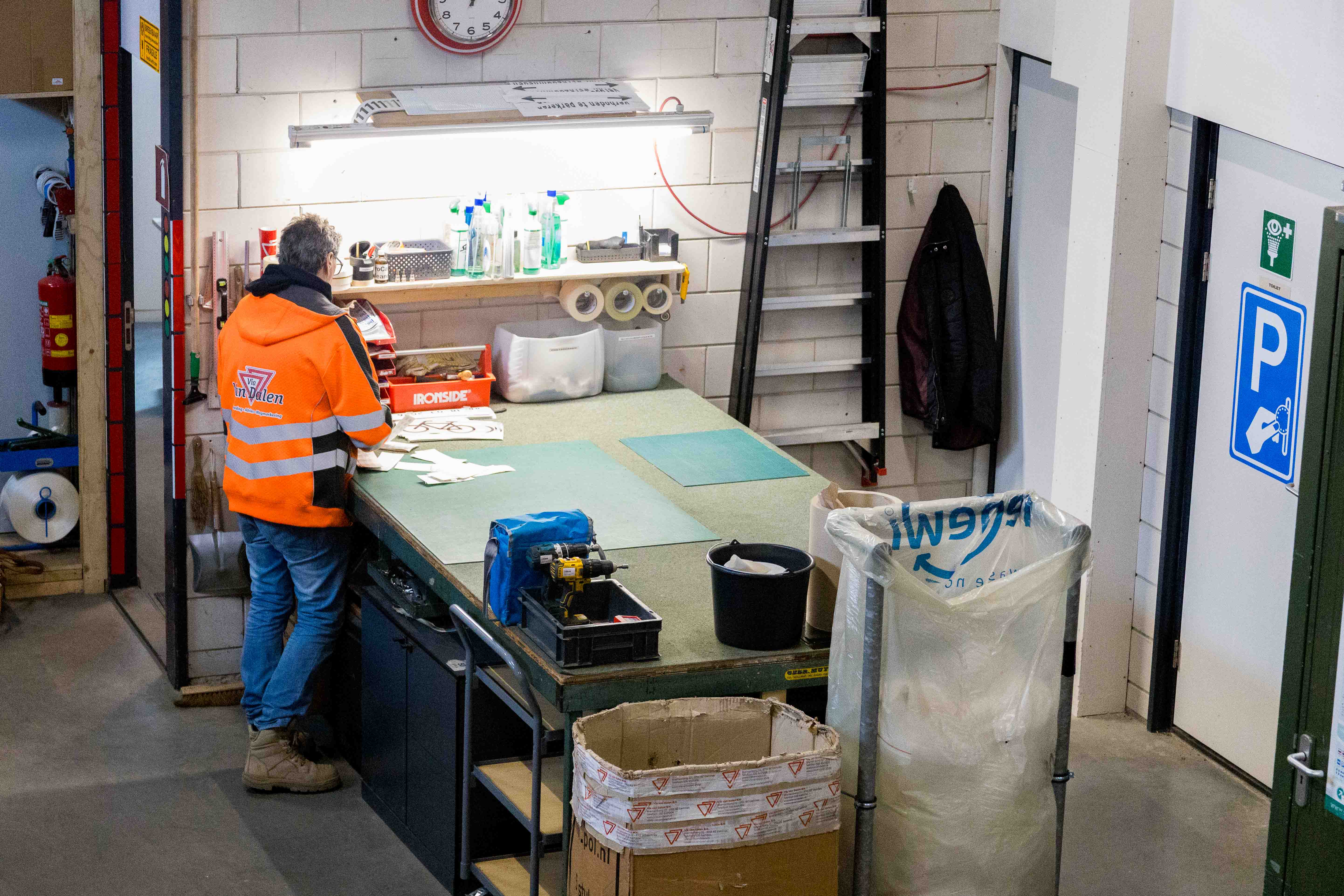
"Previously, a one meter by meter sign would easily take 20 to 25 minutes," Jan explains. "Now with printing, making and pasting, I'm done in fifteen minutes. That just saves ten minutes per sign." In addition, printing in one piece makes the job easier and more consistent. "You can now print and paste an entire board in one go. That saves an enormous amount of time AND the result is neater."
Flexibility also plays a big role. For temporary applications, such as events or parking bans, texts can be adjusted quickly. "We used to have to cut letter by letter. Now it's one line of printing and done," says Jan. Printing these texts is done on the D-Line Traffic Film.
The investment has also made Via Van Dalen less dependent on outside suppliers. "If we couldn't make it ourselves, we had to order a complete sticker," says Jan. "You often can't get those off cleanly afterwards. Now we can print everything ourselves and also replace it easily."
This fits perfectly with the growing demand for flexibility in temporary traffic measures. "With the printer, we can react much faster when a schedule changes, and in our world that happens all the time."
"Ordering through the website is easy. And if I can't find something, it's taken care of right away."
The experience is also positive about the cooperation with Dimix. "The explanation during installation was clear and practical," says Jan. "And if there is a malfunction, they think quickly. Even remotely we were able to solve a problem together." According to him, ordering materials goes just as smoothly. "Ordering through the website is easy. And if I can't find something, I just call, and it's taken care of quickly."
The demand for temporary traffic measures and sustainable signage is only expected to continue to grow. "Municipalities are increasingly demanding sustainability and flexibility," says Robert. "And we see that the amount of work continues to increase."
Although a second printer is not yet an immediate consideration, Jan does not rule it out.
"It's too early to say, but if the growth continues like this, it might well be necessary at some point."
For now, one thing is clear: the Mimaki will play an important role in the company's continued development. "The biggest advantage is simply speed and efficiency," summarizes Jan. "You can get a lot more work done in a day."
Want to know more about Via Van Dalen?
Take a look at viavandalen.nl.