Totaalleverancier voor grootformaat printoplossingen

NL : +31 (0)76 820 08 30 | Belux : +32 (0)89/46.05.60

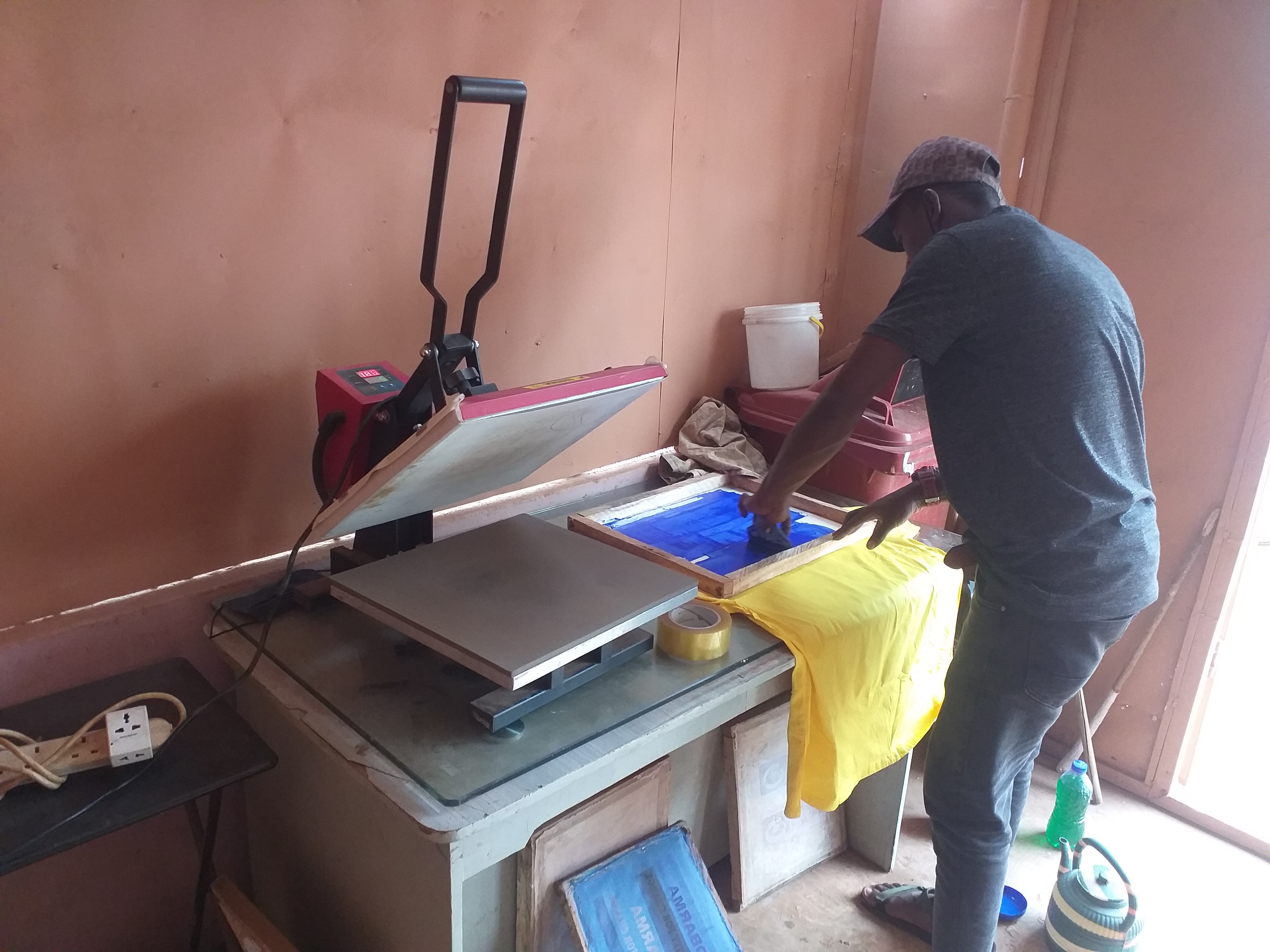
Textile printing with heat press in a workshop setting

Hoodies & sweaters printing: DTF or flex (which stays nicest on thick fabric?)

Learn to print hoodies and sweatshirts with DTF or flex: best technique by fabric, placement around seams, press tips, error resolution and washing advice.

Hoodies & sweaters printing: DTF or flex (which stays nicest on thick fabric?)

Printing a hoodie seems at first glance to be "just the same as a t-shirt," but in practice, thick fabric is a completely different world. The fabric layer is thicker, often softer (especially with a brushed interior), and you suddenly have to deal with obstructions such as a kangaroo pocket, cuffs, a hood and sturdy seams. This changes everything you normally do on a flat jersey t-shirt fabric: heat transfer, pressure distribution and even the way you position your print.

This guide is intended for three groups that make the same mistakes in real life (and thus benefit from the same solutions):

  • Promotional apparel/companies that want to have a range of hoodies made at once that look consistent and professional.
  • Start-up clothing brands that want a premium "merch feel" without the print starting to fray after 5 washes.
  • Makers & hobbyists who are experimenting with a heat press and find that hoodies fail faster than shirts.

You'll learn how to quickly choose between DTF and flex foil, which hoodie materials affect your results, how to work around seams and pockets, and most importantly, how to set up your workflow so that you don't discover only at hoodie #12 that your settings are just off.

Still unsure between techniques, or want to make sure you're not accidentally trying to solve a "hoodie problem" with the wrong printing method? In the comprehensive selection guide, we put DTF, flex and sublimation side by side on fabric type, look, print run and durability. That immediately makes the rest of this hoodie guide much easier.

Quick choice in 30 seconds: when DTF and when flex?

If you only have 30 seconds, you don't want theory. You want a choice that is correct 80% of the time, then fine tune it.

Usually choose DTF on hoodies if:

  • your design is full color (more than 2 colors, gradients, illustrations);
  • you have fine details that you don't want (or can't) cut from foil;
  • you already have transfers ready or can get them printed quickly, so you mostly want to press and through.

Usually choose flex foil on hoodies if:

  • you mainly want clean text, names or a logo in 1-2 colors;
  • you want a very "clean," almost embedded premium look (think: sports or club letters, minimal logo);
  • you want maximum control over edge definition and your design does not include microscopic details.

When you better pause and consider something else: sublimation is not a logical route on most hoodies, because hoodies are often (partly) cotton and sublimation only really excels on (light) polyester. Do you happen to have a light polyester hoodie (sport type)? Then sublimation may be a consideration, but then you're already in a niche.

Key idea: on thick fabric, the "best technique" is not only the prettiest. It is also the technique with the least chance of failure for your hoodie type and your production environment (press, experience, time).

The basics: hoodie materials and what that means for printing

For hoodies, "the fabric" is never one thing. You have fiber type (cotton/polyester), you have the knit or weave structure, and you have the finish (brushed fleece, unbrushed, enzyme-wash, etc.). That determines not only how your print looks, but also how much margin you have in your press settings.

100% cotton vs cotton/polyester blends

100% cotton is often forgiving in terms of heat, but can retain more moisture and sometimes has more "fibrillation" (microhairs) that make edges optically less tight. Blends (e.g., 80/20 or 50/50) can feel more stable and shrink less, but you need to be more alert to gloss spots and color change at higher temperatures.

Brushed inside (fleece) vs unbrushed

The inside is not just comfort. It says something about the "body" of the fabric. A fleece hoodie often has a softer compression: if you don't have enough pressure distribution on the press (e.g., because you're over cuffs or pocket edges), your print may "sink" into the texture or reduce adhesion locally.

Dark vs light colors

On dark hoodies, any imperfection is more likely to be noticed: an edge that comes off, a glossy spot or a print that looks just a little too "plastic." With DTF, coverage plays a role (white carpet pad); with flex, the choice of film (matte, gloss, stretch) plays a role.

Fabric texture and detail

Thick fabric often has more relief. This is especially important for small letters and fine lines. Flex usually gives the tightest edge, but can "bridge" on very rough textures. DTF follows the texture a little more, but can adhere just less consistently on irregular areas if your pressure is not uniform throughout.

Once you understand this, you will no longer approach hoodies as "thick t-shirts," but as a product where you first read the substrate and then choose your technique.

Because hoodies are thick and often have seams/cuffs, pressure and temperature are more likely to be "just not there." In the DTF settings guide, you'll learn how to use start values, peel selection and a second press to avoid many problems (such as edges coming off) before you make a full batch.

DTF on hoodies: strengths, limitations and best applications

DTF (Direct To Film) feels like a "quick win" to many makers: you can print full color without cutting, and you can stock transfers. On hoodies, this is often true as well-but you have to consider the properties of thick fabric.

What DTF on hoodies is really strong at

DTF is ideal for:

  • Full color logos (including with shadows or gradients)
  • Merch illustrations with a lot of detail
  • Complex badges or small icons that you don't want to peel out of foil

Especially for start-up brands, DTF is attractive: you can test designs without an immediately expensive screen printing setup, and you can create variants (small chest logo + large back print) without extra "cutting hours."

"Feel" and stretch on thick fabric

The "feel" of DTF is slightly noticeable. On a heavy hoodie this is often less noticeable than on a thin shirt, but on large areas it can still feel somewhat "patch-like." The upside: DTF can usually yield sufficiently on a hoodie that is not extremely stretchy.

Adhesion on fleece-like surfaces.

The biggest pitfall is not color, but adhesion to edges. Fleece-like fibers and lint can prevent the adhesive layer from making perfect contact everywhere. This is why pre-press (making moisture and lint "flat") and a good second press is often the difference between "looks okay" and "stays nice for months.

When DTF can fail

Take extra care with:

  • Pressing too close to seams or over the pocket edge
  • Pressure too low due to height differences (cuffs, pocket)
  • Too short a time causing edges not to "set" completely

In short: DTF on hoodies is top for visuals and detail, but requires more discipline in preparation and in how you compensate for height differences.

Flex on hoodies: strengths, limitations and best applications

Flex foil (HTV) remains a classic on hoodies, especially if you want tight, minimal results. The reason is simple: flex has a super sharp edge and you can repeat very consistently if you get your cutting and pressing process right.

Where flex on hoodies works best

Flex is usually the best choice for:

  • Names and numbers (teamwear, crew)
  • Simple logos in 1-2 colors
  • Text prints with a "premium" look

If you ever saw a hoodie with very tight chest text that looks almost factory-finished: chances are it was (well-chosen) flex.

Detail limits on texture

Hoodie texture determines how small you can go. On rough, heavy fabric, ultra-thin lines become vulnerable: they can be damaged during peeling or come off faster over time with friction.

Multicolored flex without overbaking the hoodie

Multicolored flex is perfectly fine, but on hoodies you need to monitor heat loads. Every extra press is extra heat in the fabric. That can cause gloss spots (especially on blends) or "flatten" the fabric. Solution: work with short tack presses for intermediate layers and do one neat end press with protective sheet.

Specialty flex (glitter, metallic, flock)

Specialty foil can be great for merch, but always test on a real hoodie. Glitter/metallic can be stiffer, flock is thicker (height difference!), and some foils have specific peel requirements. On thick fabric, it is especially important that your pressure is even throughout.

In short: flex is often the prettiest and tightest for simple designs, but it forces you to be realistic about fine details and about your multilayer workflow.

If you choose flex, the real difference in quality comes from your cutting and weeding process, plus how you register multi-layers. In the flex film step-by-step guide, you'll find practical tips for peeling faster, making fewer mistakes and still maintaining that sleek premium look.

Placement and positioning on hoodies (with measurement rules)

Even with perfect technique, your hoodie can look cheap if the placement is just off. And with hoodies, placement is especially tricky due to hood, pockets and thick cuffs.

Chest left vs. center chest

  • Chest left works well for small logos and feels "corporate" and clean.
  • Center chest is merch-like and requires a good balance: too high looks childish, too low looks sloppy.

Always work with a center line (collar to hem) and mark lightly with heat-resistant tape or a temporary textile marker.

Back print: take the hood into account

A large back print can partially disappear under the hood. This is not always a problem, but it affects how you design your design: keep important info (name, date, headline) a little lower than you would on a t-shirt.

Sleeve print

Sleeve prints are prone to skew because the sleeve seam distorts your "optical center." Measure from fixed points (e.g. shoulder seams) and make a simple positioning jig if doing more than 5 pieces.

Around pocket and seams: pressure-free zone

With a kangaroo pocket, the top edge is often the killer: it's a height difference that breaks your pressure. The best rule is: never press over a seam or pocket edge if you can avoid it. If you must, use press pads/pads to compensate for height.

The goal is repeatability: if hoodie #1 and #20 look identical, your production will immediately feel "pro," even if you're working in small runs.

Press institutions in practice (without trademark claims)

With hoodies, "the right setting" is always a range. It is less about one magic number and more about consistently managing pressure, time and heat on a surface that is not the same thickness everywhere.

Why "medium/firm pressure" differs in practice

On paper, a transfer may say "medium pressure." But on a hoodie with cuffs and pocket edges, "medium" on one press means something different than on another. Therefore, the correct approach is:

  • work with one test strip or one test hoodie;
  • change only one variable (pressure or time or temperature) per test;
  • write down your settings so you can repeat them.

Pre-press: getting rid of moisture and creases

Pre-press is almost mandatory with hoodies. It removes moisture from the fabric and flattens the surface so your transfer makes contact everywhere later. Plus, you can immediately see if there is a seam that will interfere with your printing zone.

Pressure distribution around seams: press pads/pads

If you ever have edges that come loose "only on one side," it's often not a material problem but a pressure distribution problem. Press pads/pads (or firm, heat-resistant padding) can compensate for the height difference.

Protective sheets and glossy spots

Gloss spots are often caused by too much heat or direct contact with the press sheet. Use a Teflon sheet or baking paper (depending on your technique) and consider a lower temperature with a slightly longer time if you notice the fabric shining.

The mindset that helps: a hoodie is a 3D object. Your job is to make the pressure area on your press as "2D" as possible.

Even the best hoodie print can appear broken if washed or dried incorrectly. In the printed garment washing guide, we explain the simple rules (and why they work) for DTF, flex and sublimation-ideal to also pass along as brief care instructions to customers or crew.

Troubleshooting hoodie printing: problem → cause → solution

Peeling at the edges (DTF)

Insufficient pressure, too short a time, insufficient second press, height difference (pouch/seam)

The film peels off after 1–2 washes

Temperature/pressure too low, incorrect peel, substrate still damp

Shiny spot on hoodie

Too high a temperature or direct contact with the heat press plate; pressing time too long

Print "sinks" into the fabric

Fabric is soft/rough, print density is too low or uneven, no pre-press

Quality check: this is how you test before you make 20 hoodies (and keep your brief in order)

Those who batch make hoodies (for crew, merch or promotion) save time by following a mini-protocol before production. It sounds boring, but it's literally the cheapest insurance against waste.

Here's how to test smartly

  1. One proof on a real hoodie from the same batch. Not on "something similar." Thick fabric behaves differently.
  2. Do a pull test on the edges (gently, but firmly). The edge is the weakest spot.
  3. If the project is important: do a mini wash test and give the print 24-48 hours to fully stabilize.

Washing and maintenance (brief summary).

At a minimum, give this instruction: wash inside out, low temperature, no aggressive drying and do not iron over the print. Hoodies often end up in the dryer; if you don't explicitly mention that, it happens anyway.

Ordering and briefing checklist (copy/paste)

Make sure you record (internally or with your client) these things:

  • Hoodie brand/type, grammage and fabric composition
  • Color (dark/light) + desired print look (matte/gloss)
  • Numbers per size (with reserve)
  • Print positions + dimensions (e.g. chest left 9 cm wide)
  • Files (vector or PNG) + color forecast

Those who do this will avoid 90% of the "rush corrections" that make hoodies unnecessarily expensive.

FAQ: hoodies & sweatshirts printing (DTF or flex)

Is DTF suitable for thick hoodies with fleece?

Yes, usually yes-provided you do pre-press and your pressure distribution is good. With fleece-like surfaces, edge adhesion is more sensitive, so work with a proof, and (where necessary) plan a second press with protective sheet to "set" the edges.

Which is better for small letters: DTF or flex?

For very tight, small letters, flex often wins on edge definition, as long as the fabric isn't too rough and your letter thickness doesn't fall below the cut limit. DTF can handle small details as well, but on thick texture it can look a little less sharp optically or get edge stress faster with a lot of friction.

Can I press over seams or over the kangaroo pocket?

You can, but it's rarely ideal. Seams and pocket edges create difference in height, causing your pressure to drop off and edges to loosen faster. If nothing else: compensate with a press pad/pad and test on the exact same hoodie construction.

Many hoodie projects fail not on press, but on delivery: wrong resolution, a "white box" around the logo or unclear colors. The submission guide tells you exactly when you need vector, when a PNG is okay, and how to avoid misunderstandings about color and background.

Once you have your workflow in focus after this hoodie guide, it's smart to validate your choice one more time in the full comparison. In the pillar guide, you'll find a clear decision tree and checklists to help you choose the technique that scores best on look, failure rate and speed for each project (hoodies, t-shirts, sports, tote bags).