Totaalleverancier voor grootformaat printoplossingen

NL : +31 (0)76 820 08 30 | Belux : +32 (0)89/46.05.60

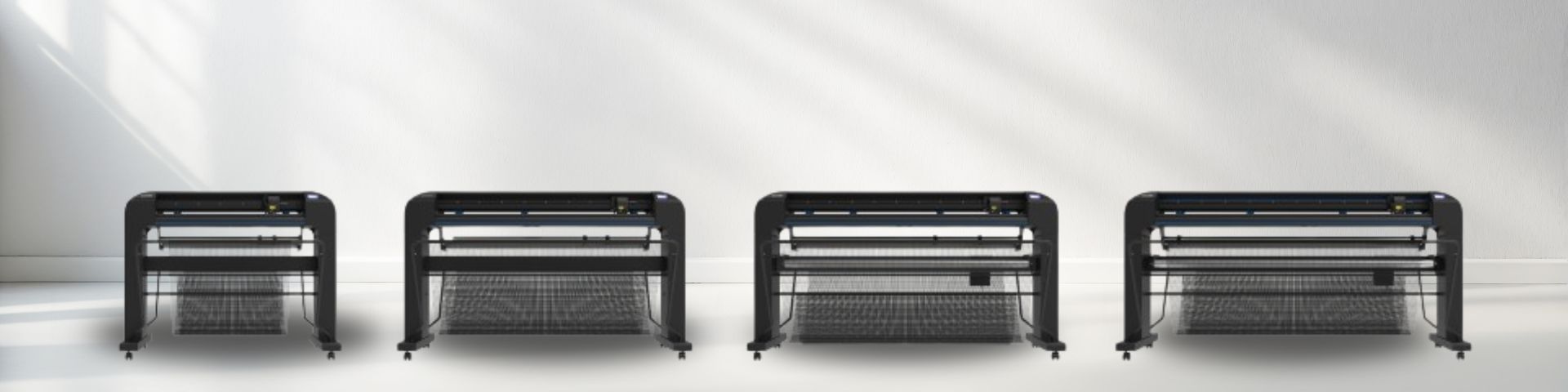
Featured image - Summa S Class 3 series cutting cutters

Summa S Class 3 series cutting cutters

Summa S Class 3 tangential and drag knife cutters feature first-class engineering and advanced cutting technology. The new S Class 3 Series is designed to meet the needs of true professionals who demand nothing less than top performance, hair-trigger precision and unparalleled versatility in their work.

Summa S Class 3 Series Roller Cutters - first-class precision with tangential and drag knives

The Summa S Class 3 Series combines high-precision True Tangential and Drag-Knife cutting heads with advanced alignment and tracking technologies. Designed for signage, print & cut workflows and demanding contour cutting, these roll cutters deliver outstanding speed, accuracy and flexibility.

Key features:


  • Choice of three types of cutting heads: Drag head (D series), True Tangential (T series) or Performance / Dual Tool head (TC series).
  • OPOS X / OPOS CAM optical registration & barcode recognition for accurate contour cutting
  • High speeds (up to 56 ips / inch per second diagonally) and strong acceleration (≈4.25 G)
  • Knife forces: Drag knife up to ~400 g; tangential knife up to ~1000 g; additional tool (pen/crease) pressure also supported
  • Broad media handling capabilities: models available with working widths from ~75 cm (~30-inch) to ~160 cm (~63-inch); in "oversized mode" the width can be increased slightly
  • Robust media/thickness compatibility: very thin films to thicker or specialty media (e.g., sandblast film)
  • Modern connectivity and workflow features: Ethernet, USB, WiFi; Summa's GoSign software; tools for object sorting, paneling and automated workflows

Frequently Asked Questions

What is the difference between the Sleep, Tangential and TC series in the S Class 3?

The S Class 3 range offers three main cutting head configurations:

  • Drag Head (D Series): The simplest and most cost-effective cutting head. The blade is dragged through the media; it is effective for softer, flexible materials such as vinyl, flex/flox, standard decal media. Cutting force is up to ~400 g. Best suited for large volumes when you don't need the higher precision or pressure of tangential cutting heads.
  • True tangential (T series): The blade is motorized, can change angle and delivers higher pressure (up to ~1000 g). This provides much cleaner cuts on thicker, reflective or hard materials; sharper angles; better performance for special jobs.
  • Performance / Dual Tool (TC Series): Combines the tangential head with dual-tool capability (e.g. cutting + pulling or cutting + creasing without changing tools), plus a more advanced camera (OPOS PRO / CAM). TC models offer faster, more reliable registration, improved workflow automation and are ideal for mixed or complex jobs.

How accurate are contour cuts over long rolls?

For media narrower than ~30 in (~75 cm), S Class 3 machines have guaranteed tracking and contour accuracy over lengths up to ~40 ft (~12 m). For wider media, accuracy drops over guaranteed lengths - typically to ~13 ft (~4 m) for wider materials. These figures apply to standard width mode; in "oversize mode," tracking performance is not guaranteed.

What material thickness can the S Class 3 handle?

It depends on the head you use:

  • With drag knife, typical media thickness ranges from very thin (≈ 0.002 in / 0.05 mm) to about 0.03 in (~0.76 mm) when using a sandblast drag knife.
  • With tangential knife, especially for sandblasting or reflective or thicker laminate materials, up to ~0.047 in (~1.19 mm) is possible.

What registration/alignment systems are included?

The S Class 3 line includes Summa's OPOS X as standard for optical registration, brand detection and alignment. Some models or factory upgrades include OPOS CAM / OPOS PRO, which have more powerful camera optics and faster on-board mark detection. Bar code job recognition is also supported; Y-line compensation is available. These tools significantly reduce alignment errors in print & cut jobs.

What are the speed and acceleration figures and why are they important?

  • Speed: up to 56 inches per second (diagonal). High speed reduces cycle times, especially for long contour cuts or large signs.
  • Acceleration: up to 4.25 G diagonally. Good acceleration means less delay in changing direction, sharper angles, better throughput, especially on jobs with many vector changes.

This is important because higher speed + acceleration means more production per hour, lower cost per job and less waiting time - assuming the rest of the workflow (printing, laminating, etc.) can keep up.

How reliable is the machine in daily production and what is required for maintenance?

The Summa S Class 3 is built with rugged components, high-quality engineering and designed for heavy use in demanding environments. Maintenance requirements are reasonable: periodic blade replacements, cleaning blade holders, servicing sensors and camera lenses, keeping media transport rollers and pinch rollers clean and properly aligned. Consumables (blades, spare parts) are widely available through Summa and authorized resellers. With proper care, these machines offer long life and consistent accuracy.

What are the power supply and installation requirements?

Power inputs are 100-120 V or 220-240 V, 50/60 Hz, with a maximum current draw of about 85 VA. Working conditions must meet the manufacturer's recommendations (temperature, humidity). Space must also be provided, not only for the cutter itself, but also for media feed, handling of wide rolls and any roll-up or basket area. Ventilation/stable power supply and grounding are important.

Is the investment justified for a small or medium-sized print shop?

Yes, provided the workload matches what these machines are built for. If your shop does a lot of print & cut work, works with special/thick materials or needs precise contour cutting, the S Class 3 can improve yield, reduce waste and speed up finishing. For lower-volume stores, a drag series model (smaller width) can offer a good ROI. TC models cost more, but reduce downtime/tool changes and offer more automation, adding value in medium to high volumes.

What accessories or options are available?

Accessories include roll-up systems (especially for the larger S140 / S160 models), a cut-off blade or basket, optional dual-head tools (pen / crease), additional blades and nosepieces, spare parts and optional software upgrades (OPOS CAM / PRO). These help to adapt the machine to specific work processes.


Documents

Technical Datasheet
Download Now
Summa Rollcutter Brochure
Download Now

Data Table

Working (Standard) Width Models

approx 75”, 120”, 140”, 160” series (~30‑inch to ~63‑inch)

Oversized Mode Width

Additional ~2.8 in (~7 cm) over standard width; note

Speed (Diagonal)

Up to 56 ips (inches per second) diagonally

Acceleration (Diagonal)

Up to 4.25 G diagonal

Knife / Tool Pressure

Drag‑knife up to ~400 grams; Tangential knife up to ~1000 grams; extra pen / creaser also up to ~1000 g in appropriate configs

Media Thickness

From ~0.002 in (~0.05 mm) up to ~0.03 in (~0.76 mm) or ~0.047 in (~1.19 mm) for sandblast tangential knife materials

Tracking Accuracy

Within ±0.004 in over 40 ft (for media <30 in wide); shorter lengths (~13 ft) for wider media; inside guaranteed spec limits

Positional Accuracy

Around 0.2% of movement or 0.01 in, whichever is greater

Connectivity

Ethernet, USB, WiFi (depending on model/region)

Alignment / Registration

OPOS X standard; OPOS CAM / OPOS PRO camera upgrade for TC models; barcode job recognition; up to 2×64 marks on X‑line; Y‑line compensation

Power Requirements

100‑120V or 220‑240V, 50/60 Hz; ~85 VA maximum

Physical Dimensions (Example

S3‑75)

Why Dimix?

  • Ordered today before 15:30; delivered tomorrow
  • No shipping costs from 290 €
  • Net prices after login
  • Extensive advice
  • Experienced technical service