Totaalleverancier voor grootformaat printoplossingen

NL : +31 (0)76 820 08 30 | Belux : +32 (0)89/46.05.60

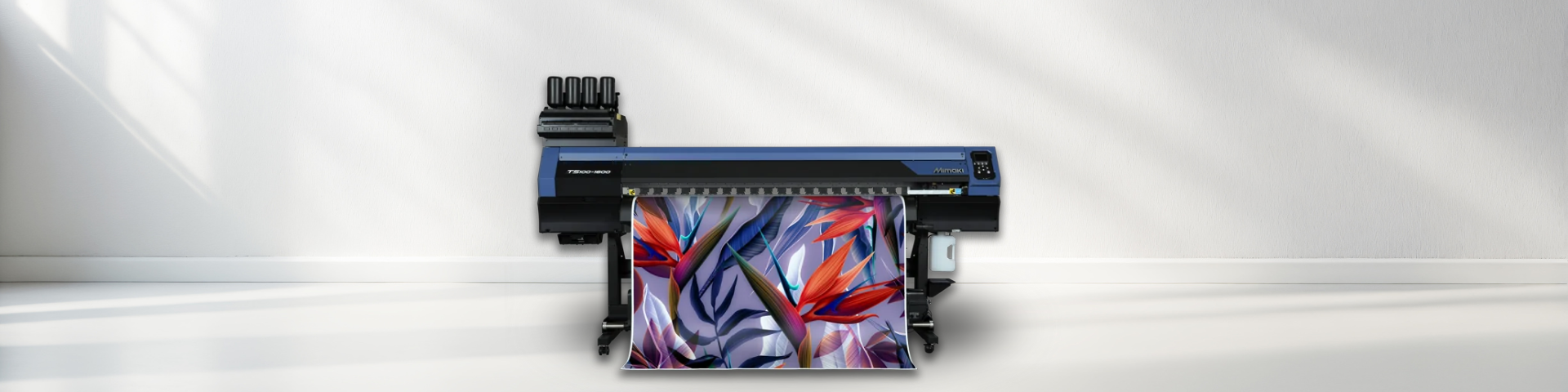
Featured image - Mimaki TS100-1600 - entry-level sublimation printer

Mimaki TS100-1600 - entry-level sublimation printer

The Mimaki TS100-1600 sublimation printer is the ideal entry-level model for textile applications such as sportswear, soft signage and interior decoration. This printer combines ease of use, vibrant colors and reliable performance for businesses starting professional sublimation production.

Mimaki TS100-1600 Sublimation Transfer Printer

The Mimaki TS100-1600 is an entry-level sublimation transfer printer that offers excellent value for fashion, soft signage, interior fabrics and promotional goods. It combines high print speed with full-color sublimation inks and built-in quality features for reliable professional output.

Key features:


  • Uses Sb610 sublimation ink in four colors (blue, magenta, yellow, black), 1 liter bottles.
  • Maximum print width of 1,610 mm (≈ 63.4") and support for media rolls weighing up to 45 kg.
  • Multiple resolution settings: 360, 600, 720, 900 dpi for flexibility between speed and quality.
  • High top speed up to 70 m²/h in fastest mode.
  • Features for automatic quality control: Nozzle Check Unit (NCU), Nozzle Recovery System (NRS) and Dot Adjustment System (DAS) to ensure consistency.
  • Processing of large rolls: media thickness up to 1 mm; roll diameter up to φ 250 mm.

Frequently Asked Questions

What types of media (fabrics or substrates) can I use with the TS100-1600?

The TS100-1600 is designed for roll-to-roll sublimation transfer printing, which means you first print on transfer paper and then heat transfer the image to polyester fabrics or polyester blends. Media thicknesses up to ~1 mm are supported. For best results, use high-quality transfer paper, check the humidity and surface finish, and make sure the polyester content is sufficient for vibrant colors. The transfer step (heat, pressure, time) is also critical.

What print speed can I expect in real production (not just the "maximum speed")?

The 70 sq m/h figure is the top speed in draft or fastest mode, with lower resolution and lighter ink coverage. In higher quality modes (600-900 dpi) or with heavy color coverage, speeds drop significantly, often to 20-40 sqm/h or less, depending on job size, RIP workflow, media handling overhead, etc. Always plan for "effective" or "average" throughput in your environment, not just peak speeds.

How consistent is color and print quality over time?

The TS100-1600 incorporates several automated systems from Mimaki: NCU (Nozzle Check Unit) to check nozzle health, NRS (Nozzle Recovery System) to treat defective nozzles without stopping production, DAS (Dot Adjustment System) for automatic feed alignment and correction, and MAPS4 to reduce banding. This helps maintain consistency, but operators must also use quality inks, maintain proper temperature and humidity, clean regularly and calibrate workflows.

What space, power and environmental conditions are required?

You need a floor space about 2.78 m wide × 0.70 m deep × 1.48 m high; weight ~166 kg. It needs single-phase power (100-120 V or 200-240 V, depending on the region), a stable voltage and enough capacity for circuit breakers. The environment should be kept between 20-30 °C, humidity between 35-65% RH (non-condensing). Good ventilation helps maintain stable ink behavior and operator safety.

What are the operational and ink cost considerations?

Ink is SB610 in 1 liter bottles, which provides a good price per square meter compared to smaller bottles. But the cost per print run depends greatly on the color coverage used, resolution mode, transfer quality (loss during transfer), waste from test prints, and so on. In addition, using original ink and recommended media helps avoid problems that can increase costs (such as spotty prints, rework).

What maintenance tasks are required and what uptime can be expected?

Automated systems reduce many maintenance burdens (checking and cleaning nozzles, automatic adjustments). Regular maintenance tasks include cleaning (print heads, wipers), nozzle performance checks, making sure media rolls are loaded correctly, checking the environment. With proper maintenance and original supplies, uptime is usually high, but expect occasional downtime for maintenance, cleaning or adjustment, especially when changing media types.

How does this model compare to more expensive or larger sublimation printers?

Compared to premium or larger machines, the TS100-1600 may have fewer special color options (no fluorescent colors, etc.), may have a slower processing speed when the highest quality is required, and some media types (very thick, unusual substrates) may not be supported. However, for many standard transfer-to-polyester jobs, soft signage, interior fabrics, etc., it offers very good value: good quality, reliable automation, manageable operating costs.

What software/RIP is included and what options are available?

The standard RIP software included is RasterLink7. For more advanced textile workflows, you can use TxLink4 (Lite or full), which supports more jobs, variable data, smoother gradations, etc. Make sure your computer hardware is sufficient (RAM, storage, CPU) to handle large files and high resolutions and you may need color profiling tools for accurate and repeatable colors.

What should I know about certification, safety and ink/environmental compliance?

The SB610 inks are certified under OEKO-TEX / ECO PASSPORT, which is crucial for textile applications, especially those involving skin contact, apparel, children's products or interior decoration. The printer also meets certifications such as CE, RoHS, ENERGY STAR, FCC, VCCI, etc. It is important to ensure that local regulations and safety requirements are met, especially for ventilation, waste ink handling and electrical installations.


Documents

Data Table

Print width (max)

1,610 mm (≈ 63.4″)

Media width (max)

1,620 mm

Ink type/colors

Sb610 sublimation ink, 4 colors (B, M, Y, K)

Resolution modes

360, 600, 720, 900 dpi

Maximum print speed

70 m²/h in fastest production mode

Media roll Weight

Up to 45 kg per roll

Media thickness

Up to 1 mm

Roll diameter

≤ φ 250 mm

Network & interface

USB 2.0, Ethernet 1000BASE-T

Power supply

Single-phase AC 100–120V / 200–240V ±10%, 50/60Hz ±1Hz

Power (consumption)

AC100V

Dimensions (WxDxH)

2,775 × 700 × 1,475 mm

Weight

Approximately 166 kg

Operating environment

Temp 20–30°C, humidity 35–65% (non-condensing)

Why Dimix?

  • Ordered today before 15:30; delivered tomorrow
  • No shipping costs from 290 €
  • Net prices after login
  • Extensive advice
  • Experienced technical service